
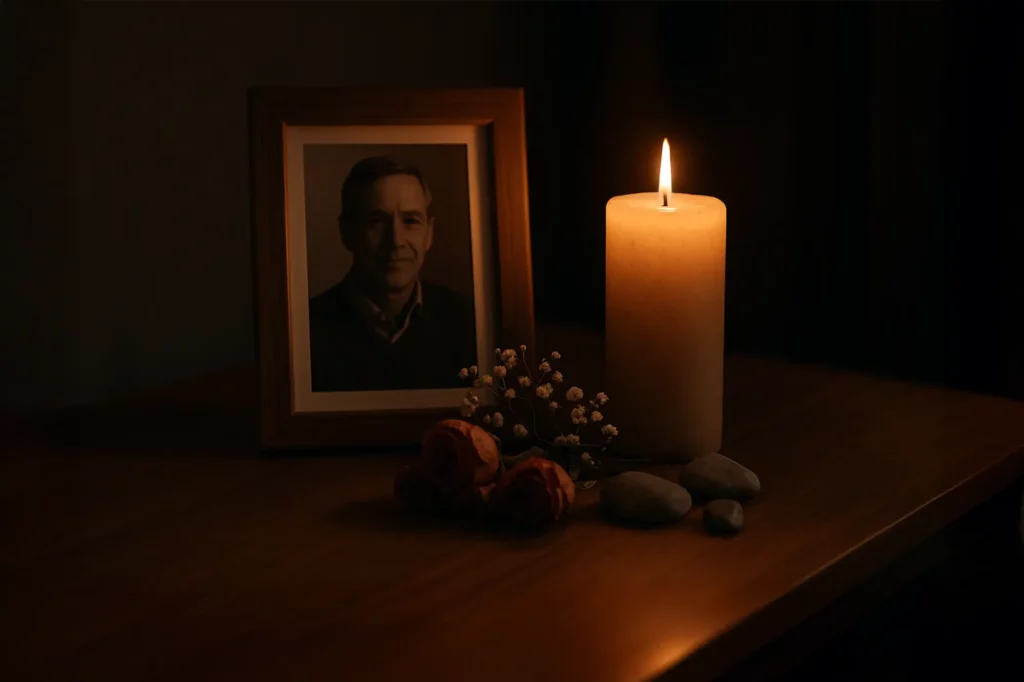
When we lose someone we love, it’s natural to look for ways to stay connected to them. In many cultures, people create altars, small spaces where we can place things that remind us of those who have passed. It might be a photo, a candle, a favorite object, or something that holds meaning. These spaces help us process our grief personally. They give us time to pause, reflect, and keep the memory of loved ones close. Making an altar isn’t just about remembering the past, it also helps us find comfort in the present and learn how to carry that love forward in life.
1. Healing Through Creating the Altar
Think of the altar as a small world of its own, a kind of portal between you and the person who has passed. Every object you place there and the way you arrange it becomes part of that world. It’s not just decoration, it’s intention.
When you build an altar, it’s also about helping both yourself and the one who has gone to find peace. We don’t want to hold them back or keep them stuck here. Instead, the altar can be a space to honor their memory while allowing their spirit to move on. The energy of the altar should change as you change, it grows with you. Your relationship with them continues in a different form. We don’t forget them. We carry what they taught us, the lessons and wisdom they left behind. The altar helps us connect with that part of them that lives in us.
To start, clean the space where you’ll make your altar, and treat that act as a moment of intention. You are preparing a sacred spot with a specific purpose. You can place a photo, light a candle, or include objects that remind you of them. Try to make it feel like its own little world, maybe by surrounding it with flowers, stones, or anything that gives it a sense of being enclosed and safe.
If you’re honoring someone who has passed away, include something that represents helping them on their journey, an object or symbol that shows your support. It could be something simple, but it must carry meaning for you and your connection.
Grief Support 101: 10 Things You Should Know
2. Navigating Grief and Transformation with Altars
Once the altar is created, it becomes more than a space for remembrance. It’s a place to sit with your emotions and let them move through you. Grief isn’t something we fix or get over; it’s something we learn to live with. Spending time at the altar helps you be honest with what you feel. Sadness, love, and gratitude are all part of the healing process.
The altar also reminds us that our connection with the person doesn’t end when they die. It simply changes form. For example, if it’s your grandfather you’ve lost, ask yourself what his deeper purpose was in your life. Did he teach you something that a spiritual grandfather would, something reflecting the wisdom of a greater Father or Creator? Maybe he showed you patience, faith, or kindness. If that lesson lives in you now, then the bond continues because what he gave you is timeless. If something is timeless, you can be sure you will meet again in some way. What comes from love and truth doesn’t disappear.
If the lesson or reason that person came into your life feels like something God Himself would want you to learn, then you see the larger pattern. You begin to understand the constellation of how God places people in our lives for a purpose. When you recognize that, grief becomes less about losing and more about understanding. The altar guides transformation, from pain into meaning, and from separation into deeper connection with the divine plan.
3. Rebirth Is Real
When someone passes, their soul doesn’t just disappear, it continues its journey, often becoming wiser because it is no longer bound by a body that forgets. This makes the connection between the living and the deceased an opportunity for growth and guidance. The altar becomes a place where you can continue communicating with them, seeing them as a guide, a protector, and a reflection of your own soul.
Because of this exchange, you can help them detach from the material world without holding onto grief. In return, they help you understand more about yourself and your spiritual path. If the relationship is balanced, it becomes a true give and take. They may share more with you than you give. You can guide them in detaching from worldly attachments. The altar evolves as the soul evolves. You can add new objects, remove old ones, and renew it as life and reincarnation continue.
Discover These 5 Ways to Help You Through Your Grief
4. A Message for Those who are Grieving
If you’re grieving right now, or you’ve just lost someone you love, the best thing I can tell you is this: the connection doesn’t end, it evolves. Just as the soul continues to grow and move through new experiences, the relationship between you and your loved one also changes form. Reincarnation is real, and what you’re feeling now is part of that ongoing journey.
When you sense their presence or feel their energy, you’re not imagining it. You’re learning to tune into something deeper, the subtle spiritual energy that connects all of us. Both you and they are growing. They are evolving on their side, and you’re learning on yours. The love between you becomes the bridge that allows this growth to happen quietly, naturally, and with purpose.
The post Healing Through Altars: Honoring the Deceased and Navigating Grief appeared first on askAstrology.

