Nuance, complex thinking and the capacity to embrace paradox all seem to have got lost in a febrile mood of tribal identity and entrenched beliefs whether political, religious or other that now damps down intelligent debate. Disagreement ends in howl round. Maybe ‘twas always this or blame it on the can-be-fanatical and not-open-to-evidence Uranus Neptune conjunction that launched the world wide web in 1991. Religion, various, rearing its head does not help either.
We are now moving into Pluto in (broadly) tolerant Aquarius which reaped the fruits of the Enlightenment and the liberte, eqalite, fraternite French Revolution last time round. Side by side at the moment we have Saturn Neptune at its best fighting for the underdog (women and workers). We should be hopeful, yet there seems little sign of progress towards the ideal. Paradoxes are rife in Gaza (poor Palestinians, brutal Hamas and a misogynistic, anti-gay culture) and the Iran situation (ditto on attitudes and appalling regime but downtrodden civilians are collateral damage in illegal US-Israel assault); and in the toxic debate about immigration in the UK including new laws against anti-Muslim hostility.
Trump is the banner carrier for intolerance yet as philosopher Karl Popper pointed out in his book The Open Society and Its Enemies – “Unlimited tolerance must lead to the disappearance of tolerance. If we extend unlimited tolerance even to those who are intolerant … then the tolerant will be destroyed, and tolerance with them.”
Keir Starmer and his cohorts are the opposite as the (admittedly right wing) Telegraph opines: “The legal immigration systems of western democracies have been described as “welcoming” and “liberal”, but in the name of freedom and tolerance we have opened our doors to those who hate these values and wish to destroy them.”
In between are the bewildered electorate who are “as repulsed by Trumpism as by the hyper-liberalism to which it was the putative remedy.” “What this moment demands is not — the sentimentalism that mistakes weakness for virtue, nor the strongman theatrics that mistake vengeance for strength.” (Matthew Syed).
Looking back on the influential thinkers who were around pre and post the last Pluto in Aquarius a constant theme is that religion should be kept separate from political and cultural life.
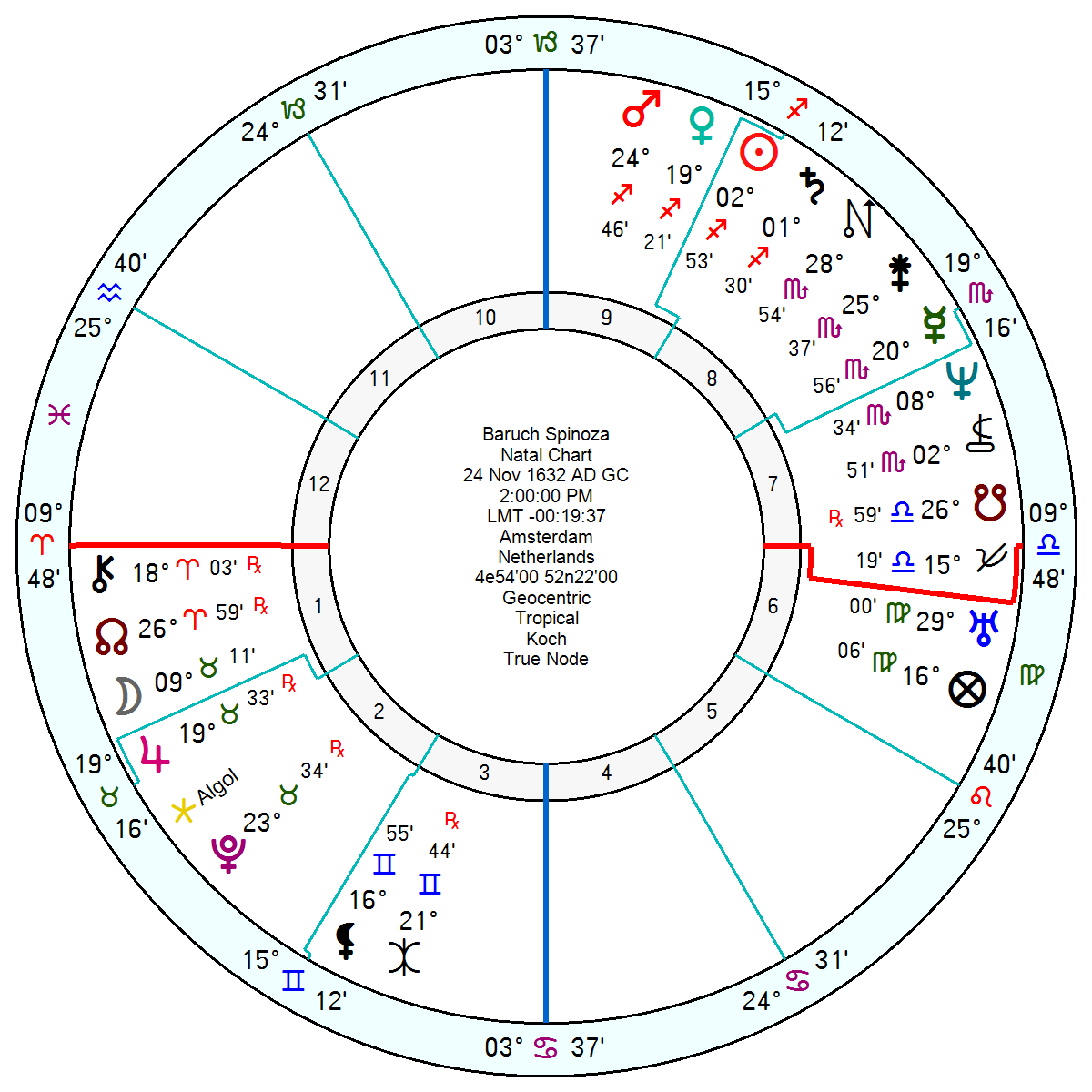
Philosopher Baruch Spinoza, 24 November 1632 2pm Amsterdam, a forerunner of the Age of Enlightenment, thought that ecclesiastic authority should have no role in a secular, democratic state. He argued for a pantheistic view of God and explored the place of human freedom in a world devoid of theological, cosmological, and political moorings.
John Locke, 29 August 1632, an English philosopher, one of the most influential of the Enlightenment thinkers, known as the “father of liberalism” contended that religion is a matter for the individual, ruling out religious coercion and argued for the separation of church and state. His Two Treatises on Government argues for government based on the consent of the governed and the right to revolt against tyrannous government, which has lost consent. The Two Treatises had a direct influence on the language that Thomas Jefferson chose in his drafting the July 1776 Declaration of Independence during the American Revolution.
Later on, John Stuart Mill, 20 May 1808, an English philosopher, conceived of liberty as justifying the freedom of the individual in opposition to unlimited state and social control and advocated political and social reforms such as proportional representation, the emancipation of women, and the development of labour organisations.
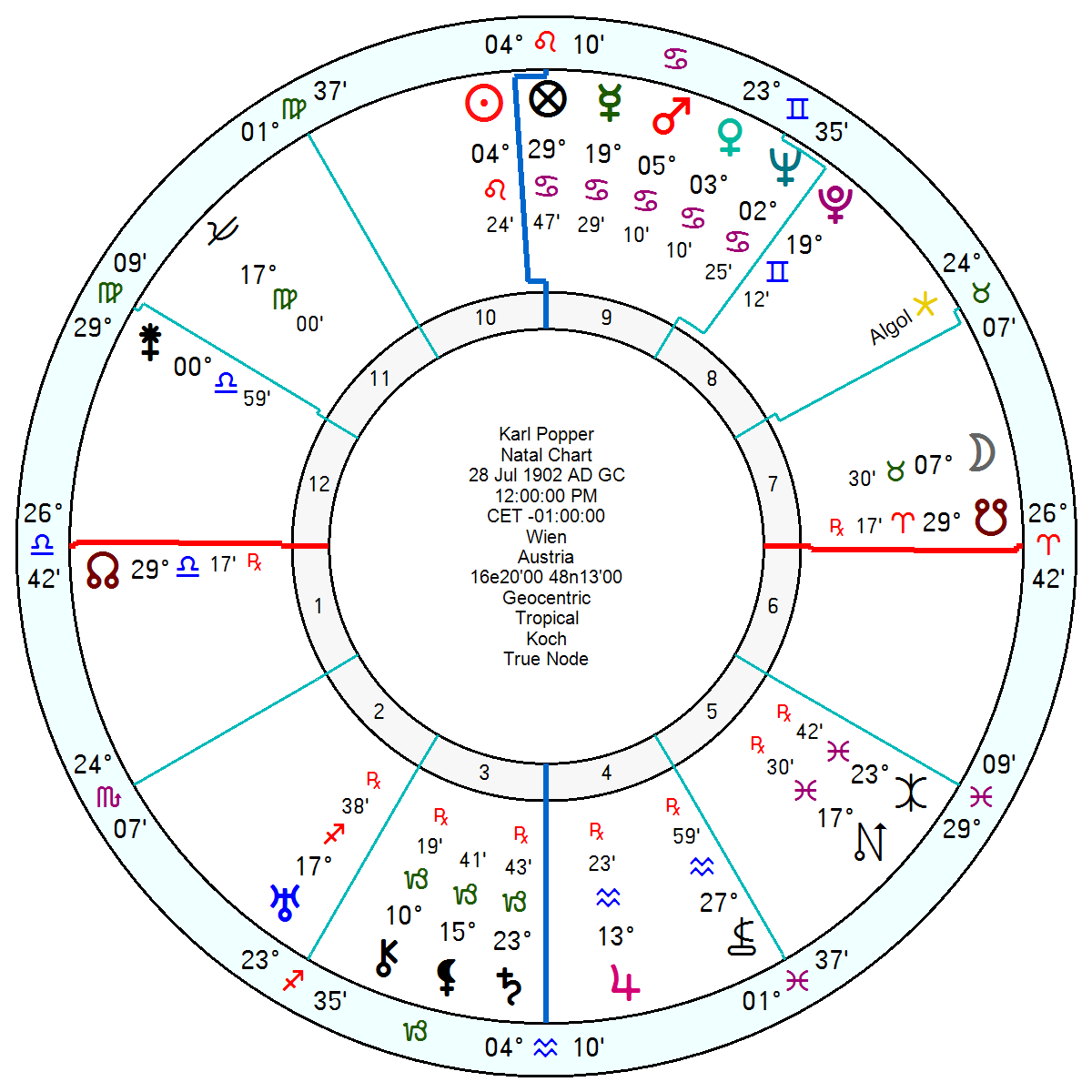
Karl Popper, 28 July 1902 Austria, known for his Enlightenment rationalism and humanism, vigorously defended liberal democracy. He was a dogged opponent of totalitarianism, communism, nationalism, fascism.
Just as Europe has moved away from religion as a central facet of life (less so the USA) the entry of Islam via immigration has posed a thorny question. Allison Pearson in the Telegraph has let loose a howl of outrage against the UK Government’s new social cohesion strategy Protecting What Matters which tackles “hostility and hatred directed at Muslims and those perceived to be Muslim”.
She writes: “(If) you make a perfectly valid criticism, reflecting a concern that is shared by millions of people – for instance viewing the burka as a hideous, life-limiting garment that has no place in an equal society – before you can say “Islamophobia”, you are the problem.” “Don’t they realise their great-grandmothers fought so that women in this country didn’t have to cover themselves, stay inside the house or be marched to a polling station by a controlling patriarch who tells them how to vote?”
Oddly enough the Islamic Calendar of 622, Saudi Arabia 1902, the Iran Islamic Republic 1979, Al Quaeda 1988/92 all have either Uranus Neptune conjunctions (622) or Uranus Neptune Opposition (1902), a complicated Uranus midway between Neptune Pluto and Uranus Neptune conjunction (1979), and Uranus Neptune conjunction (1992) – so all share the fairly dogmatic Uranus Neptune stamp which brooks no argument or deviation from its world view.
Not sure I am any clearer about how to encapsulate what comes next.
Assuming Nate Hagens/Norman Cohn are correct and the upsurge of Messiahs (religion will save us) comes in a period of social upheaval and uncertainty, there may be hope that the scope for complex thinking will return. During tumultuous times the pendulum of cultural attitudes swings from one extreme to the other. The middle way when it settles would allow for less rigid attitudes. Except that fundamentalist Islam has been at full throttle over most of the 20th Century, though only really visible in the UK since 1989. So it cannot be put down to this particular celestial gear change. Though maybe this transition is what is needed to nudge the pendulum over.
More thinking-in-process than astrology I am afraid.
The post Being right or losing the capacity to think first appeared on Astroinform with Marjorie Orr – Star4cast.