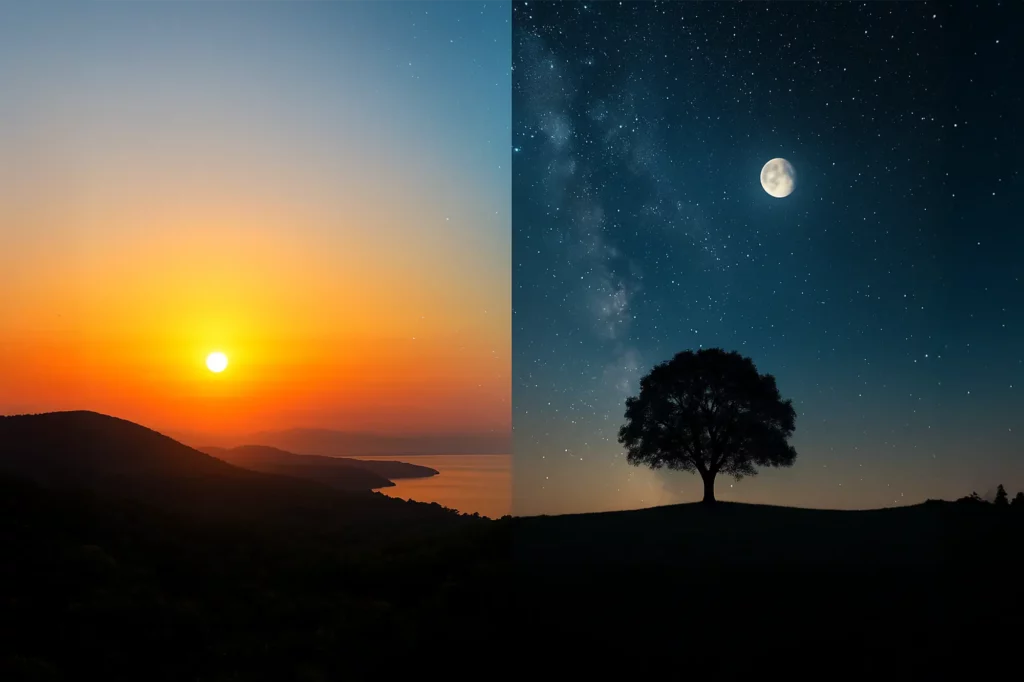
There is a quiet difference between dawn and dusk. One carries the scent of beginning; the other, the softness of release. When we meditate, we are not separate from these rhythms. The hour we choose gently shapes our focus, emotional tone, and even the symbolism surrounding our practice.
In astrology and contemplative traditions, timing matters—not as fate, but as atmosphere. Let’s explore how morning and evening meditation affect your energy, why it matters, and how to choose the time that truly supports your Life.
Why Time of Day Influences Meditation
Your body follows circadian rhythms—24-hour biological cycles regulating hormones, alertness, and mood. Cortisol (a wakefulness hormone) peaks naturally in the morning, while melatonin (linked to rest) rises after dark. Meditation interacts with these rhythms.
Astrologically, the Sun symbolizes consciousness and outward identity. The Moon reflects emotion and intuition. Morning practice aligns symbolically with solar clarity; evening practice resonates with lunar reflection.
This isn’t mystical determinism. It’s pattern awareness. By understanding the tone of each time, you can work with the current rather than against it.
Morning Meditation: Solar Focus and Intention
Morning meditation tends to feel structured and forward-moving. The nervous system is naturally transitioning from rest to activity. This makes it ideal for intention-setting and mental clarity.
Traditionally, sunrise practices are emphasized during:
New Moon periods, when setting intentions (the New Moon occurs once monthly, beginning a lunar cycle).
Major personal transits like your Solar Return (the Sun returning to your birth position, once a year).
Mercury direct phases, when focus and decision-making often feel steadier.
Examples:
Fire signs (Aries, Leo, Sagittarius) often thrive with dynamic morning visualization.
Career-focused individuals may find clarity before workplace noise begins.
During a busy life transition, sunrise grounding can stabilize anxiety.
Morning meditation supports agency. It asks: What energy do I want to carry into this day?
Evening Meditation: Lunar Reflection and Release
Evening meditation invites processing. Emotional material often surfaces when external demands quiet down. The Moon—symbol of memory and instinct—feels closer at night, both literally and symbolically.
This timing is especially supportive during:
Full Moons, when emotions tend to peak and require integration.
Venus or Neptune transits, which heighten sensitivity and reflection.
Mercury retrograde periods (three to four times yearly), when review is wiser than initiation.
Examples:
Water signs (Cancer, Scorpio, Pisces) may deepen emotional insight after sunset.
Those processing grief or relationship shifts often benefit from nighttime journaling meditation.
Creative individuals may access intuitive imagery more easily under lunar energy.
Evening practice asks: What am I ready to release or understand more gently?
Glossary: Key Terms Made Simple
Circadian Rhythm: The body’s internal 24-hour clock regulating sleep, hormones, and alertness.
New/Full Moon: Monthly lunar phases marking new beginnings and culminations.
Retrograde: An apparent backward motion of a planet, symbolically linked to reflection and review.
How to Choose (Responsibly and Realistically)
There is no universal rule. Astrology offers context, not commands. The most sustainable practice fits both your chart and your actual schedule.
Research on habit formation shows consistency matters more than intensity. A five-minute daily sunrise ritual practiced regularly shapes neuroplasticity (the brain’s ability to form new patterns) more effectively than sporadic hour-long sessions.
Choose morning if you seek structure, gratitude, and direction.
Choose evening if you need emotional integration and release.
Track lunar phases for one month and note mood shifts.
Experiment for 14 days at each time before deciding.
Ask yourself gently: When do I feel most mentally clear? When do I feel most emotionally honest?
Mini-FAQ
Is one time spiritually stronger?
Not inherently. Power comes from alignment and consistency rather than clock time.
Can I meditate both morning and night?
Yes. Some people use morning for intention and evening for reflection. Keep sessions balanced to avoid burnout.
What if my schedule shifts often?
Anchor your practice to a consistent cue (like after brushing your teeth) rather than a strict hour.
The Sun rises, the Moon returns, and somewhere within those cycles, you are learning your own rhythm. Time of day does not control your spiritual growth—it colors it. With awareness, you can choose the shade that supports your Life most tenderly.
The post Morning Light or Moon Glow? How Time of Day Shapes Your Meditation Energy appeared first on askAstrology.