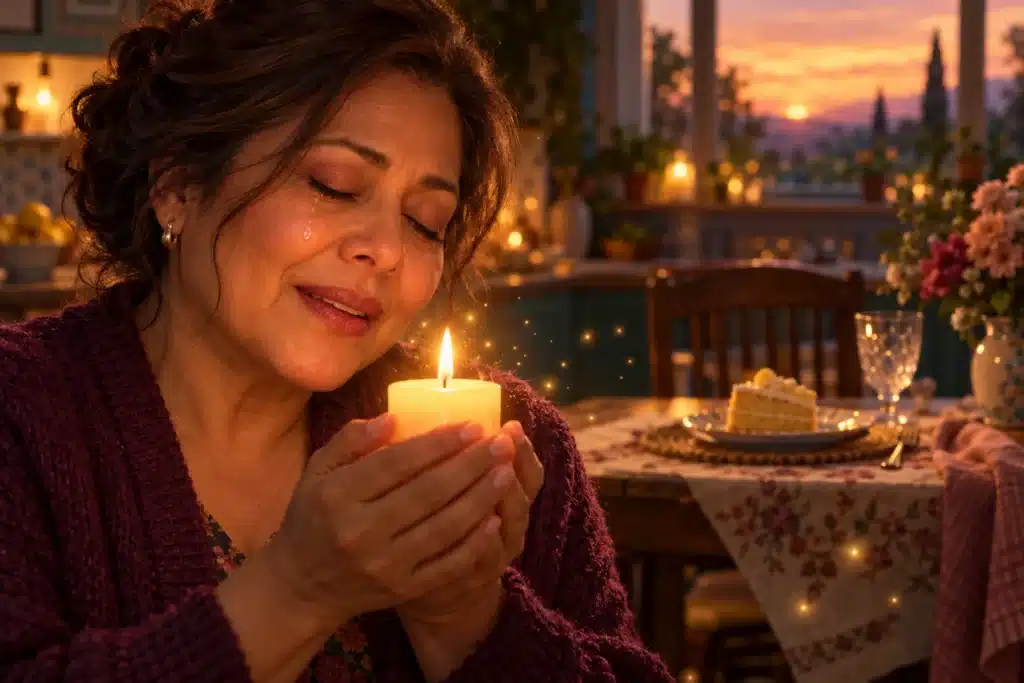
A grief anniversary can arrive before the date does. Halloween is tonight, and sometimes the air already feels crowded with memory, even while everyone else is buying candy or lighting porch pumpkins.
Then, in two days, All Souls’ Day will ask the Western Church to remember the dead. Many of us are already remembering in smaller, quieter ways: a recipe, a sweater, a contact saved in your phone that you cannot bring yourself to delete.
This is about the name. The one you still know by heart. The one you may have stopped saying out loud.
The Grief Anniversary Nobody Warns You About
A grief anniversary often begins as a weather system in the body. The date itself may be manageable, almost ordinary, while the week before feels strangely sharp. You forget, then your shoulders remember. You sleep lightly, misplace simple things, or tear up over a song in a store.
Because memory keeps its own calendar, your mind may reach the day slowly. Loss happened on one day, and then it became a before and an after, tucked into the pattern of ordinary life.
The name can grow quieter during this same season. Nobody holds a meeting and decides, ‘We will say it less now.’ Instead, conversations learn new routes. Someone says ‘your mom’ or ‘your brother’ or ‘my friend from years ago.’ The full name waits at the edge of the table.
In Gaelic tradition, a place was set at the table for dead kin at Samhain, on the night of October 31. That old gesture understands something tender: remembrance needs a place to sit. For wider context, you might read about how cultures have marked mourning.
Why We Stop Saying the Name
We stop for reasons that sound kind: to spare the room, or because we read faces too quickly. Our silence mostly protects the living from an awkward pause.
Maybe you fear crying in the cereal aisle when a neighbor who has forgotten asks how your father is. Maybe you fear the small freeze after you mention a birthday, a joke, a favorite pie. So you learn to speak around the person, and you become fluent in soft avoidance. Every grief anniversary then arrives a little quieter than the one before.
For two years after my grandmother died, I called her ‘Gran’ in my head and ‘my grandmother’ out loud, as if her name were too heavy to carry into a room. Then my niece asked, ‘What was her real name?’ I said ‘Rosalind,’ and my voice cracked on the second syllable. My niece just said, ‘That’s pretty.’ Something in me unclenched.
After that, I understood how silence grows by accident. Conversations move on because people are trying to be polite, and politeness can leave a chair empty twice. The old line, that time heals everything if you simply wait, asks too much patience from a wounded heart.
I’m not sure there is a right way to do this. I only know the quiet way stopped working for me. If you are already worn down by ordinary life, what worn-out people say without noticing may feel familiar too.
When Someone Else Says It First
There is a particular mercy in hearing someone else say the name first. It can be quick, almost casual: ‘I thought of Daniel today,’ or ‘Maria would have loved this rain.’ The words may take only a few seconds. Still, they can land like a hand on the back.
Because the bereaved person often carries the fear of making others uncomfortable, a friend who speaks plainly offers relief. The gesture says, ‘I remember too.’ It gives the name oxygen without asking for tears or stories.
If you want to be that friend, keep it simple, especially near a grief anniversary. Say the name. Mention one specific thing. Then leave room. You might write, ‘I remembered Leah’s laugh this morning,’ or ‘I made the soup your uncle liked.’ After that, let the person answer in their own rhythm.
This kindness matters for animal companions too. People grieve them deeply, yet their names can disappear even faster from conversation. If that ache belongs to you, saying goodbye to a beloved pet offers a tender reflection.
What name would feel like relief if someone spoke it gently today?
Small Ways to Say It Again
Say it once.
That may be the whole ritual of a grief anniversary at first. Say the name in the car, while washing a cup, or while standing beside the sink with the light off. If you want something more held, choose a small action with edges.
Raise a toast at dinner and use the name before anyone changes the subject. Cook one recipe in their name, even if the crust burns or the seasoning goes sideways. Or send a message to someone who knew them too: ‘I missed Nora today.’ That sentence is enough.
I’ve made Rosalind’s lemon cake on her birthday every year since that conversation with my niece. It never rises the way hers did, and I say her name out loud while I scrape the burnt edge off. My niece now asks for the burnt edge. I think Rosalind would have laughed at that.
Since All Souls’ Day falls on November 2, you might set a place at the table that day. Keep it plain: a napkin, a glass, a chair pulled out, with nobody watching. If objects help you focus, you may also find comfort in a small altar for someone you miss.
Some families carry names easily. Others carry them like fragile bowls. Begin where you are. A whisper counts. A written name counts, and so does a birthday candle no one photographs.
Making a Grief Anniversary Your Own
A grief anniversary can be shaped softly, without turning it into an obligation. Take a walk at the hour you usually feel restless. Play the song that opens the room inside your chest. Put an empty chair near the table, then let it stay empty without explaining it to anyone.
Also, give yourself permission to laugh. Memory is rarely solemn all the way through. Someone you loved may have told terrible jokes, burned pancakes, cheated at cards or sung off-key with great confidence. After a loss, laughter can feel disloyal for a second. Then it can feel like recognition.
You may skip the day entirely this year. That is allowed. A grief anniversary can pass with nothing formal at all, especially when life is already heavy. You can simply hold the name in your mind and let the rest be quiet.
The week before may carry more ache than the date itself, and your way of remembering may change from one year to the next. If a name surfaced while you read this, I’d gently suggest that tonight is a good night to say it once, softly, to someone who will be glad to hear it.
The post The Name You Stopped Saying Out Loud appeared first on askAstrology.