Lucky people may seem touched by fortune, yet Richard Wiseman’s research points to something plainer and far more useful: attention. Today is Friday the 13th, which makes the subject amusingly sharp, because superstition loves a dramatic costume. Wiseman, however, was studying behavior, perception and expectation.
His work challenges the cliche that some people are simply born lucky. The first difference he found looks painfully ordinary. Some people scan the room. Others stare at the task. This offers perspective and predicts nothing. Still, as how chance and fortune have been understood shows, humans have always argued with randomness.
What Lucky People Noticed That Everyone Else Missed
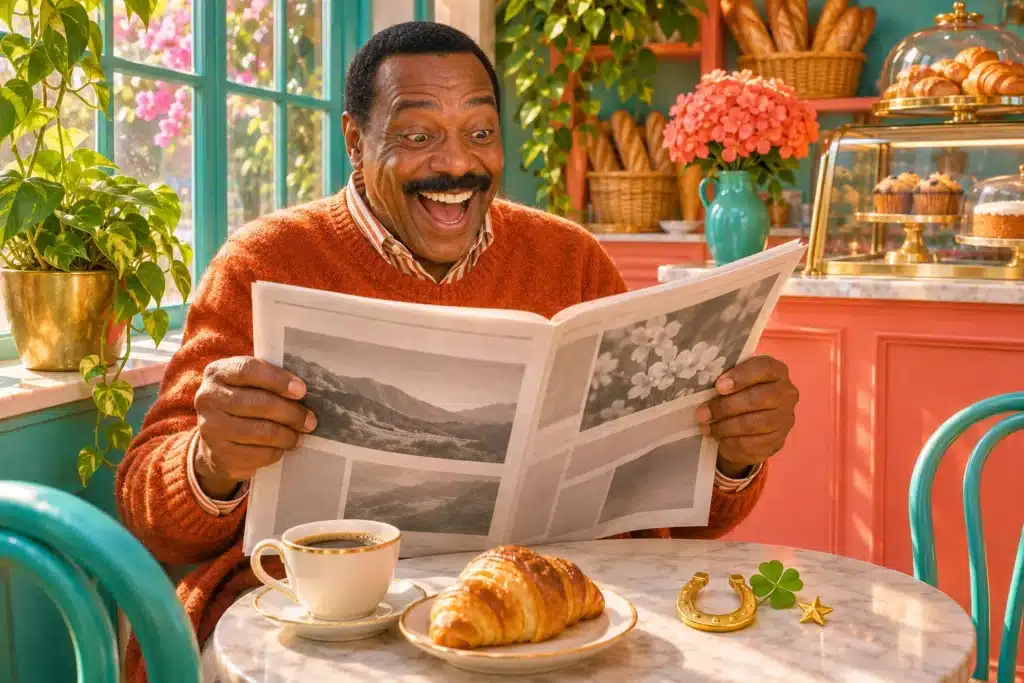
Wiseman’s cleanest demonstration was almost cruel in its simplicity. Participants received a newspaper and were asked to count the photographs inside. The unlucky volunteers usually took about two minutes. The lucky people often finished in seconds.
Why? Page two carried a half-page message: ‘Stop counting. There are 43 photographs in this newspaper.’ The message was huge. It was set in type over two inches high, sitting right where a relaxed eye could catch it.
Then came the sharper twist. Further in, another large message offered $250 to anyone who mentioned it to the researcher. Again, the unlucky tended to miss it. They were busy solving the problem they had been handed.
I love this test because it insults the ego gently. Most of us assume focus is always a virtue. However, focus can become a tunnel. Lucky people did the assigned task while staying open to the page around it. Luck is mostly a habit of attention.
Ten Years, 400 Volunteers and One Big Limit
Wiseman, a psychologist at the University of Hertfordshire in England, studied luck for ten years. Through newspaper and magazine ads, he recruited 400 people who felt exceptionally lucky or unlucky. They ranged from 18 to 84, which gives the work a broad human texture.
That scale matters, and it is also where my doubt starts. Four hundred people who already called themselves lucky or unlucky is no random sample. They walked in with a story about themselves, and that story was the very thing being measured.
Self-description is powerful, because identity changes what we notice. If I believe I’m unlucky, I may collect every delay, rejection and awkward silence as evidence. Meanwhile, I may ignore the stranger who gave useful directions, the missed train that led to a better conversation, or the extra hour that saved a rushed decision.
So the honest reading is narrow. The study describes a behavioral pattern among people who saw themselves as lucky, and that is all it can describe. For another strange pattern in what people report, see the 17,000-person survey about ghosts and chance.
Why Tension Shrinks What You See
Wiseman reported that unlucky volunteers scored as more tense and anxious. That matters because anxiety narrows attention. When the nervous system expects danger, it becomes a guard dog at one gate, while opportunity walks through another.
Think of a job hunter scanning a newspaper for one exact title: marketing assistant, full-time, nearby. Because the search feels intense, every other ad becomes visual noise. A training course vanishes. A freelance lead disappears. A small company looking for ‘communications help’ never enters the mind.
I tried Wiseman’s newspaper test on my sister at her kitchen table, with the local paper and a sticky note on page two: ‘Stop counting, there are 31 photos.’ She counted all 31, slowly, then asked why I was grinning. My nephew, who is nine, found the note in about four seconds, because he was flipping pages looking for the comics. Same paper. Different hunt.
That is the raw nerve of the research. Tension makes the world smaller. Therefore, feeling unlucky can feed unlucky seeing. If this sounds familiar, read why an anxious mind rereads the same message, because the same narrowing happens in love, at work, and in ordinary Tuesday decisions.
The Four Habits That Kept Showing Up
Wiseman summarized his findings in four principles. Lucky people notice chances, listen to hunches, expect good things, and turn bad luck around. These sound soft until you translate them into behavior.
First, noticing chances means varying your inputs. Take a new route, read a different noticeboard, or ask one extra question at the end of a meeting. Opportunity often arrives disguised as irrelevant information.
Second, listening to hunches means treating your gut as data, without obeying every impulse. Maybe your stomach tightens during a negotiation. Pause, ask for time, and check the facts. A hunch is a signal flare, and you still decide whether to follow it.
Third, expecting good things changes how you approach people. If you expect humiliation, you may never send the email. If you expect a fair chance of success, you will at least knock, and the knock is where fortune gets a doorway.
Fourth, turning bad luck around often involves comparison. Wiseman noted that lucky people would imagine how an event could have been worse. A delayed train becomes reading time. A failed plan becomes a useful draft. For a practical cousin of that move, try rewriting a plan halfway through the season.
Practicing What Lucky People Do, Starting This Week
Wiseman even tested training. In his ‘luck school,’ participants practiced exercises based on the four principles. After a month, 80 percent said they felt happier and luckier. That result was self-reported, so read it as a feeling people described, which is still worth something.
The idea is simple: behave like lucky people before you feel like one, then watch what your attention starts to collect. Try this for seven days.
First, take one new route each day, even if it is only a different aisle, street, playlist or lunch spot. Your brain needs fresh edges. Second, speak to one low-stakes stranger. Ask the barista what they recommend, compliment a neighbor’s dog, or ask a coworker about their project. Keep it warm and brief. Third, reframe one irritation with the worse-case exercise. When something goes wrong, write: ‘How could this have been worse?’ Then write: ‘What can I still use here?’
I’ve done the seven days myself, and the stranger part was the hardest. By day five I had a bakery recommendation from a man in a bus queue, and I now go there every Saturday. It is a small result, and it is exactly the kind Wiseman was describing. Start tomorrow morning with the route, and keep a note of anything you would have walked past last week.
The post A Psychologist Spent Years Studying Lucky People. Here Is What They Noticed First appeared first on askAstrology.