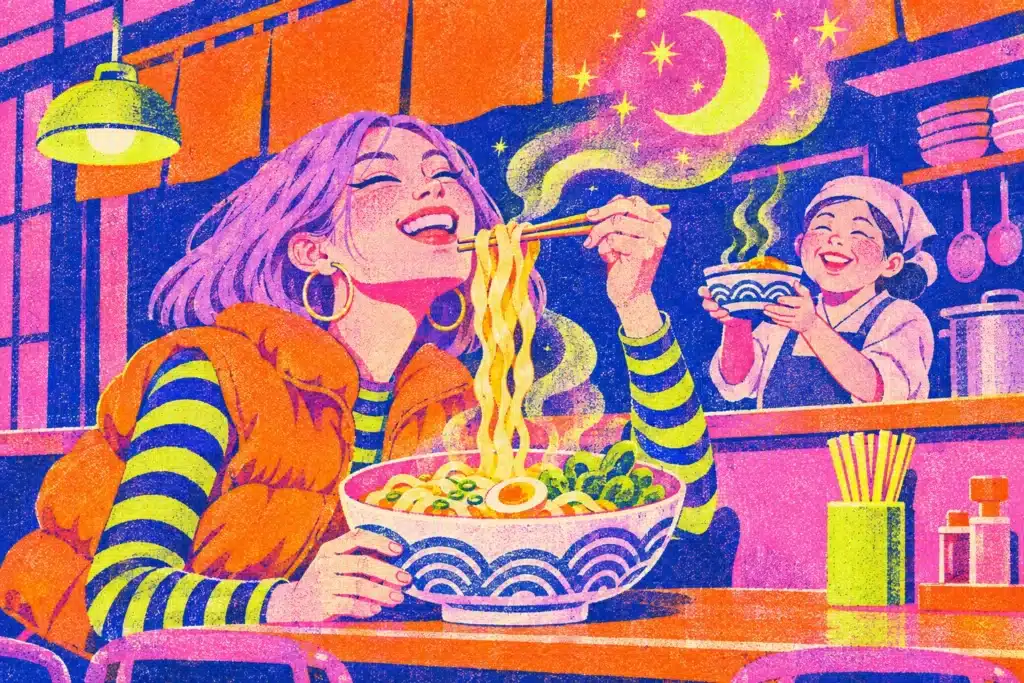
If you are always ordering the same dish, your appetite may be sending a tiny SOS in marinara. Maybe the menu opens, your eyes glaze over, and your mouth says the order before your brain arrives. However, that tiny ritual can reveal a lot. Your usual order is a mood ring you can eat.
This offers perspective and predicts nothing. Food memories carry people inside them, so the dish you keep choosing may be about belonging, bandwidth, or the emotional weather in your little Los Angeles-sized universe.
Always Ordering the Same Dish Is a Choice Too
Your usual order can look automatic, yet it is still a choice. The menu stops mattering when your nervous system wants fewer tabs open. After a loud day, a familiar bowl can feel like turning down the brightness on life.
People love to say that ordering the same thing makes you boring. Please. Repetition can be self-knowledge wearing a takeout bag. Meanwhile, novelty takes energy, and sometimes your inner producer has already spent the whole budget before dinner.
The research backs this up. It comes from Jordan Troisi and Shira Gabriel at the University at Buffalo, published in Psychological Science in 2011. In two experiments, eating comfort food brought relationship-related thoughts to mind automatically. Also, comfort food softened the sting of feeling left out, mainly for people who were already secure in their relationships. The researchers tie the comfort in comfort food to the people we associate it with, which you can read in the research on why comfort food comforts.
So, if you are always ordering the same dish, pasta or tacos or soup, your body may be reaching toward a person-shaped memory. Because the stomach is dramatic. Very Hollywood.
The Soup, the Noodles, the Grilled Cheese
Warm, soft, childhood-coded dishes often show up when you need to be looked after. Soup, noodles, mashed potatoes, grilled cheese, rice porridge, and buttery toast all speak fluent blanket. They do the emotional equivalent of texting, ‘I got you,’ after a weird day.
For one entire year I ordered pad see ew from the same tiny Thai place every Thursday, extra egg, no chili. The owner started saying ‘the usual?’ before I opened my mouth. Then one night, without thinking, I asked for the spiciest curry on the menu, and she raised one eyebrow so high I thought it would leave her face. That was the week I quit my job. The noodles knew before I did.
The noodles knew.
People often reach for these dishes after decision-heavy days, awkward social moments, family stress, or the bone-deep fatigue described in being tired of pretending you are fine. However, the need underneath is smart. You are seeking softness when life has too many hard edges.
If you are always ordering the same dish in this category, ask yourself one gentle question before the next order: ‘Where do I wish someone would make things easier?’ Then keep the soup if you want it. Awareness is the extra crouton.
The Spicy Order and the Big Shared Plate
Spicy food, crunchy textures, and big shared plates often point toward a need for stimulation, company, or a little electricity in the aura. Think hot wings, sizzling fajitas, Korean barbecue, mezze, or that appetizer tower nobody needs and everyone secretly wants.
When life gets very quiet, heat can create momentum. The mouth wakes up, the body pays attention, and dinner becomes a tiny plot twist. Therefore, the spicy order may arrive when your week feels flat, your calendar feels beige, or your social life has become you and nine unread emails.
However, when life gets very loud, the shared plate can mean something different. You may want connection without deep emotional labor. Passing dumplings across a table is easier than explaining your entire inner monologue, especially when the phrases worn-out people keep saying are circling your brain.
If always ordering the same dish now means ordering it hotter, crunchier, or more communal, notice the setting. Are you adding spice because you crave excitement? Or are you ordering for the table because you want closeness with less pressure?
For a playful cosmic detour, you can compare this with the cozy meal that matches each sign.
I keep a running note on my phone of what I order and how my week went. It is unscientific and a little embarrassing. Still, the pattern is loud. Soup weeks are deadline weeks, and the weeks I order the sizzling platter are the weeks I miss my people.
The Exact Same Salad Every Time
The exact same salad every time deserves respect. It can mean control, clarity, and a beautiful refusal to spend fourteen minutes decoding a menu when your brain has already sat through seven meetings. A reliable order saves decision-making for somewhere else.
Sometimes a person orders the same dish because it is simply the best thing on the menu. The vinaigrette slaps, the crunch ratio is correct, and the avocado distribution feels spiritually fair.
Still, repetition can protect you while quietly shrinking your room to move. If you panic when the restaurant is closed, or feel weirdly guilty trying the pasta, the order may have become a tiny rule. Meanwhile, rules love to cosplay as preferences.
Always ordering the same dish here may reveal a need for steadiness during uncertain weeks. Before changing anything, identify the job your routine performs. Does it save time? Reduce social anxiety? Keep lunch predictable between chaotic tasks? Once you know the job, you can decide whether the habit still serves you.
Try a low-drama experiment: keep the salad, change the dressing. Or keep the dressing, add one new topping.
When Always Ordering the Same Dish Stops Working
When the usual stops working, you feel it before you admit it. The food tastes fine, yet the comfort feels muted. You finish the meal and still want something unnamed.
Common signs include boredom, resentment, autopilot ordering, or a sudden curiosity about someone else’s plate. Also, if you keep choosing your usual while wishing the night felt different, the dish may be carrying an old need. Your life has moved, while the order stayed parked.
Change one thing. Seriously, one. Because the order is symbolic, a small switch can feel oversized. Your brain reads it as a vote for possibility.
Swap the side if you want flexibility without drama.
When the whole routine feels stale, take the same order to a new place.
Bring different company if the food is fine and the mood needs witnesses.
If you have been always ordering the same dish, try a one-week check-in. Before ordering, name one feeling and one reason you want that exact meal. Finally, let honesty make the call. Keep the usual if it still fits, and switch it if your appetite is whispering plot twist.
Dinner can be a tiny revelation with fries. Save this for your next menu stare-down, and send it to the friend with a standing burrito appointment.
The post The Dish You Always Order Says What You Need Right Now appeared first on askAstrology.